

A deck can look familiar enough that small changes are easy to miss.
A railing may have developed movement. A board may be damaged near a frequently used step. Leaves can collect between furniture and the house, while an old repair remains on the list for another weekend.
October is a useful time to review those conditions before winter makes outdoor work less convenient.
Fall deck maintenance includes cleaning, but it should also help you distinguish ordinary upkeep from problems requiring a qualified contractor.
For homeowners in Nicholasville and Central Kentucky, the first step is to understand the existing deck. Its material, age, condition, and construction determine the appropriate care and repair approach.
This checklist explains how to organize the review and prepare useful information before shopping for materials.
Identify the Decking Material First
Do not begin with a cleaner or coating before knowing what surface you have.
Wood, composite, and other decking products can require different care. Even products in the same broad category may have different instructions.
Look for project records, receipts, leftover materials, or product markings. If you are unsure, bring photographs and available information to a knowledgeable supplier or contractor.
Separate the Surface From the Structure
The visible boards are one part of the deck.
Framing, connections, posts, stairs, and railings have their own roles. A surface that looks good does not establish that the supporting structure is sound.
Likewise, replacing damaged decking does not automatically resolve a problem below it.
Locate Manufacturer Guidance
For branded products, identify the correct product line and generation.
Trex provides different care and cleaning guidance for its decking ranges. That distinction is a reminder to use instructions that match your installation.
Walk the Deck and Record Concerns
Begin with a visual review from accessible areas.
Look for visible damage, unusual movement, loose components, and changes you have noticed during use.
Record the location of each concern and take photographs without placing yourself in an unsafe position.
Check Frequently Used Areas
Pay attention to entries, steps, seating areas, and the routes people use most.
Wear and damage may be concentrated in those places. Note whether the issue affects one board or a larger area.
Treat Instability as a Reason for Assessment
If a railing, stair, or part of the deck feels unstable, restrict access and arrange qualified assessment.
Do not continue using it to see whether the problem gets worse. A fall deck inspection checklist should lead to appropriate action, not substitute for structural evaluation.
Avoid dismantling components without understanding how the deck is supported.
Review Railings and Stairs Separately
Railings and stairs deserve their own place on the checklist.
Describe movement, damaged parts, or visible connection problems to a contractor. Explain whether the issue is recent or has been recurring.
Avoid Assuming a New Screw Solves the Problem
A loose component may involve the connection, surrounding material, or design.
Tightening or replacing a fastener without understanding the cause may leave the concern unresolved.
Have the necessary work specified before purchasing replacement parts.
Keep Replacement Systems Compatible
If parts belong to a manufactured railing system, identify the product and approved components.
Mixing similar-looking parts can create installation difficulties or an unsuitable assembly. Product compatibility matters more than appearance alone.
Clear Leaves and Debris Before Cleaning
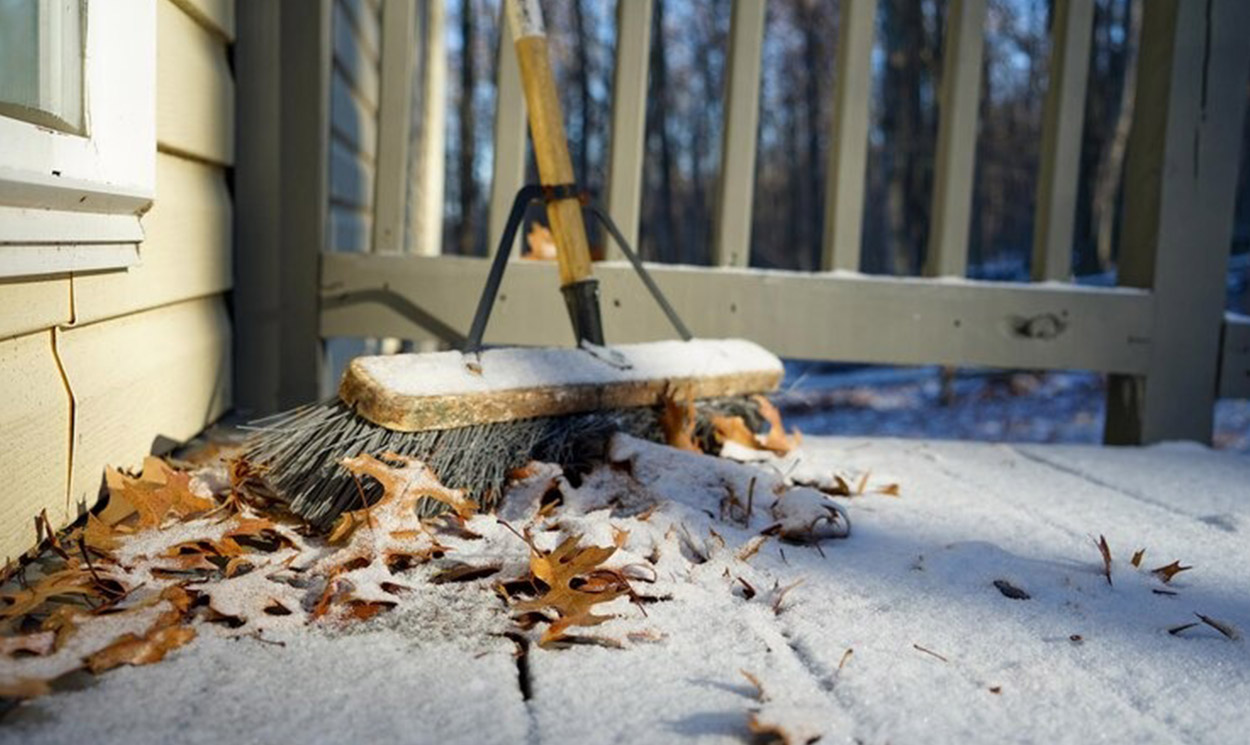
Deck cleaning before winter starts with removing loose material.
Leaves and debris can accumulate around furniture, planters, and other sheltered areas. Clearing them makes the surface easier to review and helps reveal concealed staining or damage.
Move Items With Care
Check the condition of furniture and planters before moving them.
Avoid dragging objects across the surface. If a large item is difficult to move, arrange help rather than damaging the deck or risking injury.
Check Areas Beneath Stored Objects
Look for changes in appearance or persistent dampness where items have remained.
Document what you find. If a concern extends beyond surface cleaning, ask a professional to assess it.
Cleaning should reveal condition rather than hide a problem under a fresh arrangement of furniture.
Use a Cleaning Method Suited to the Product
Do not assume that a pressure washer, stiff brush, or strong cleaner is appropriate.
Review the relevant product instructions and use compatible equipment and cleaning materials.
Composite Decking Requires Product-Specific Care
Trex’s guidance distinguishes care for different product ranges and explains approved approaches for dirt, debris, and other concerns.
Do not transfer instructions from one composite brand or generation to another without checking.
For composite decking in Central Kentucky, retain product details with your home records. They remain useful long after installation.
Wood Decking Needs a Separate Assessment
Wood condition, existing coatings, and the intended next treatment affect preparation.
Ask about the appropriate cleaning and drying process before applying a finish. Avoid assuming a surface is ready simply because it looks dry.
Any coating should follow its own product instructions and suitable application conditions.
Decide Whether Surface Damage Needs Repair or Replacement
A damaged board does not automatically require a complete deck replacement. It also should not be dismissed without understanding its condition.
Have the affected area assessed and ask whether the issue is isolated.
Investigate the Cause
Consider why damage developed.
A contractor may need to examine surrounding materials, connections, moisture exposure, or the supporting structure.
Replacing a board without addressing the cause may lead to another repair.
Confirm the Replacement Specification
For deck repair materials, identify the necessary dimensions, product, profile, and installation requirements.
Nominal names do not always describe exact dimensions. Record what the contractor specifies rather than selecting from memory.
For older composite products, ask whether compatible replacements remain available. A visually close alternative may not fit the existing fastening system.
Compare Wood and Composite Options for Larger Projects
If substantial replacement is being considered, use the opportunity to evaluate materials against your priorities.
Wood and composite products have different appearance, maintenance, and installation considerations.
Discuss the Maintenance You Can Provide
Think about cleaning, finish care where applicable, and your expectations over time.
Composite does not mean maintenance-free. Wood does not describe one uniform product or treatment.
Compare actual products and their care requirements.
Ask About the Complete System
A decking choice may affect fasteners, trim, framing requirements, and other components.
The contractor should determine the installation specification. Do not assume new boards can be installed over existing framing without evaluation.
Stratton Lumber’s building product selection includes composite decking, lumber, and related categories useful for those discussions.
Select Treated Lumber for the Intended Application
If your repair specifies treated wood, confirm the product and application.
Treated lumber in Nicholasville, KY should be selected according to the project’s requirements rather than treated as interchangeable material.
Ask your contractor to identify dimensions, treatment requirements, and compatible hardware.
Bring the Written Specification
A clear list helps the supplier distinguish what the project needs.
Include quantities, lengths, and any relevant product information. Photographs can help explain the job but should not replace a professional specification for structural work.
Check Availability Before Scheduling Work
Special sizes or products may need ordering.
Confirm what is available and how substitutions would be reviewed. Do not replace a specified material solely because another product is immediately in stock.
Stratton’s lumber products page is a starting point for discussing current options.
Review Fasteners and Accessories Together
Boards are not the complete shopping list.
The project may also need approved fasteners, connectors, trim, and other components.
Ask which accessories are required for the selected system and who will confirm quantities.
Avoid Guessing About Compatibility
Fasteners that look similar may have different intended uses.
Follow the product and project requirements. A material supplier can help identify stocked products, while the contractor remains responsible for specifying the construction work.
Keep the Order Organized
Group materials by stage or area if that helps installation.
Review the list before pickup or delivery so missing components do not become apparent halfway through the work.
Plan Around Weather and Product Requirements
October does not guarantee suitable conditions for every outdoor task.
Cleaning, coatings, and construction work may have different scheduling needs.
Discuss temperature, moisture, product availability, and site access with the people performing the work.
Prioritize Necessary Work
Separate concerns that affect use from improvements that can wait.
An unstable stair needs a different response from a preferred color change. Do not allow a cosmetic plan to delay assessment of a material problem.
Use Fall to Prepare a Spring Project
If a larger project cannot reasonably happen now, organize its scope.
Obtain assessment, compare products, and record decisions. That preparation can make later ordering clearer without committing to an unsupported start date.
Bring Useful Information to Stratton Lumber
When shopping for building materials in Nicholasville, KY, bring the project specification and existing product details.
Useful information includes:
- Photographs.
- Measurements.
- Material identification.
- Contractor recommendations.
- Quantities and lengths.
- Fastening requirements.
- Desired timing.
Stratton Lumber is a family-owned building-materials supplier serving Central Kentucky. Its website lists lumber, composite decking, hardware, and other products.
It also describes access to a network of building and remodeling contractors. Ask about a referral if you need help assessing or performing the work.
Confirm availability and any pickup or delivery arrangements directly.
Frequently Asked Questions
What should fall deck maintenance include?
Identify the material, remove debris, review visible condition, and follow appropriate cleaning instructions. Record concerns involving boards, railings, stairs, and connections. Arrange qualified assessment for instability or significant damage. Maintenance should help determine the next action rather than assume every problem is cosmetic.
Can I pressure-wash a composite deck?
That depends on the product and manufacturer instructions. Some products permit a specified method, while others require a different approach. Identify the brand and product line before using equipment. Do not apply one deck’s settings or cleaning process to another without checking.
Should I replace a damaged board before winter?
Have the damage assessed and determine its cause. An isolated replacement may be appropriate, but surrounding materials or the structure may also need attention. If the condition affects safe use, restrict access and obtain professional advice rather than waiting for a seasonal project date.
Can composite boards replace wood boards on an existing deck?
Possibly, but the existing structure and proposed product need evaluation. Composite installation requirements may differ from the current system. A qualified contractor should determine whether the framing, spacing, connections, and other details are suitable before you purchase replacement boards.
What should I bring when buying deck repair materials?
Bring a written material list, measurements, photographs, and the existing product information. Include contractor specifications for structural materials and fasteners. Confirm quantities, compatibility, and availability so the purchase matches the planned work rather than an approximate visual comparison.
Does Stratton Lumber sell decking and treated lumber?
Its website lists composite decking and lumber products, including treated wood. Ask about the specific products, dimensions, and quantities required for your project. Availability and ordering needs vary, so confirm details before scheduling the work.
Make Fall Deck Maintenance Lead to the Right Next Step
Effective fall deck maintenance connects cleaning with an informed condition review and a clear repair plan.
Identify the material, document concerns, and have significant issues assessed before selecting products.
Explore Stratton Lumber’s building materials and lumber products. Call 859-885-9426, or visit 306 North 3rd Street, Nicholasville, KY 40356, with your project list.
