
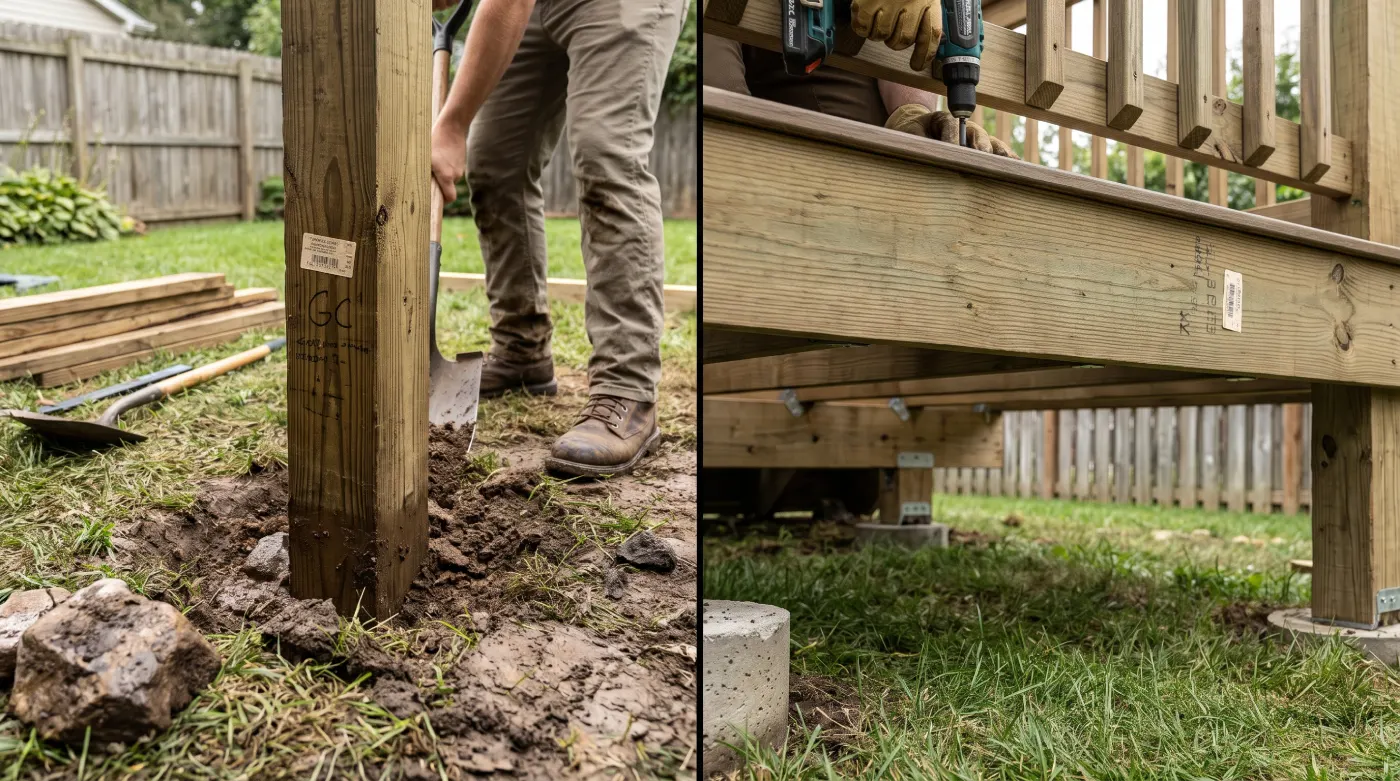
The difference in ground contact vs above ground treated lumber concerns the exposure conditions the treatment is intended to address. It is not simply a difference in color, price, or how heavy a board feels.
Use the product’s treatment information and the project’s requirements to choose. A board that will touch soil, stay wet, be difficult to replace, or sit in a poorly drying location may need a different specification from an exposed component that drains and dries readily.
The label alone also does not establish structural suitability. Lumber grade, size, species, design, fasteners, and treatment category answer different questions. For a Central Kentucky deck, fence, or outdoor project, bring those questions together before ordering materials.
Start With the Exposure, Not the Product Nickname
“Pressure treated” describes a broad product family. It does not identify every intended use or the conditions for which a particular item is specified.
Describe where the wood will be installed. Will it contact soil or concrete? Can water collect against it? Is it sheltered from drying? Will it be easy to inspect and replace?
Also consider the finished project, not only the condition on installation day. Landscaping, added mulch, storage, or later enclosure can change the exposure around a component.
A clear project description helps the supplier locate the relevant treatment information. Asking for “the usual outdoor lumber” leaves important details unresolved and can result in materials being selected from habit rather than from the actual application.
Understand the Role of Use Categories
The American Wood Protection Association’s Use Category System organizes treatment selection around service exposure and deterioration hazards. Its published material distinguishes above-ground and ground-contact uses within that framework.
Terms such as UC3B and UC4A can appear in product or specification discussions, but the correct category depends on the application and applicable requirements. Do not choose solely by memorizing two codes.
Ask the supplier to connect the product’s label with your project’s exposure description. For a specified or engineered project, the governing documents may already identify what is required.
The useful habit is to read the actual tag and confirm its meaning. A familiar category reference should support that review, not replace the designer’s or manufacturer’s requirements for the job.
Distinguish Treatment Category From Structural Grade
A treatment designation concerns intended exposure protection. A structural grade concerns a different set of material characteristics relevant to design and use.
One does not automatically establish the other. A board can have the treatment category you need while still being the wrong size, grade, or product for the structural role.
Similarly, a higher visual grade does not turn an above-ground treatment into a ground-contact specification.
Keep these fields separate on the order: species or product, dimensions, grade where required, treatment/use category, and any additional project requirements. That makes the supplier conversation more precise and helps the receiving crew check the correct information when materials arrive.
Read More Than One Number on the End Tag
A pressure-treated lumber end tag can identify the manufacturer, treatment information, preservative, intended use, and relevant quality references. The exact format varies.
Record the whole tag rather than copying one number into a shopping note. A retention figure without the preservative and product context can be misleading.
Do not compare two products by assuming the same numeric retention value means the same suitability. Treatment specifications depend on the particular combination of material, preservative, and use.
If the tag is missing or unreadable, ask the supplier for the product documentation. The board’s appearance is not a reliable replacement for the information needed to confirm its intended application.
The USDA Forest Products Laboratory’s Wood Preservation chapter explains the roles of preservative treatment and wood characteristics. It provides technical background for understanding why a treatment description must be matched to the specified application.
Review Ground-Contact Conditions Carefully
Soil contact is an obvious reason to examine a ground-contact specification, but the broader exposure conditions also matter.
A component can be above the soil and still have difficulty drying. Nearby surfaces, trapped debris, enclosed details, and water collection can change the risk profile.
Describe those details accurately to the designer or supplier. Do not assume that visible clearance alone settles the choice.
Also ask how the component will be inspected and maintained. A difficult-to-replace member deserves deliberate specification rather than selection based only on the fact that it is technically above grade. The treatment should be appropriate to the actual conditions and governing project requirements.
Do Not Treat Ground-Contact Lumber as a Design Shortcut
A suitable treatment does not make drainage, detailing, or maintenance irrelevant. Wood still needs to be installed within the requirements of the product and project.
Avoid creating pockets where water and debris can remain against the material. Keep relevant inspection and maintenance access in mind.
If the design involves structural support, have the appropriate professional address loads, connections, and other requirements. A more protective treatment label does not approve an undersized member or an unsuitable fastening detail.
This is an important distinction at the lumber counter. The supplier can help identify products, but a treatment choice should not be mistaken for a complete structural design.
Match Fasteners and Hardware to the Materials
Fasteners and connectors should be compatible with the treatment and application. Do not assume hardware already in the workshop is suitable simply because it fits the board.
Check the relevant product and connector-manufacturer instructions. Include the environment in the review, especially where the assembly has additional exposure concerns.
Keep the hardware specification with the lumber order so the installer is not forced to improvise after delivery.
If two documents appear inconsistent, resolve the question before installation. A coordinated specification is more useful than choosing one product first and hoping the rest of the assembly can be adapted around it without review.
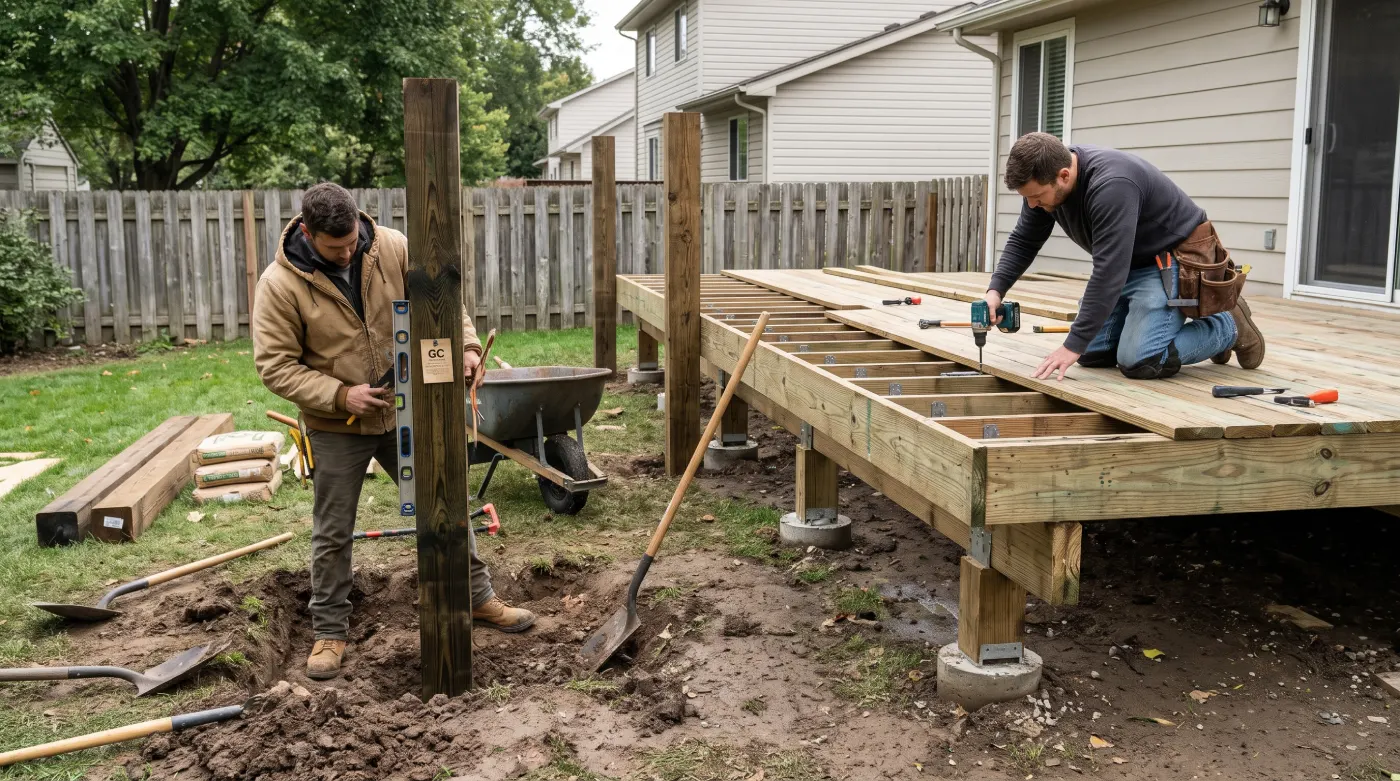
Plan for Cuts, Holes, and Field Handling
Cutting or drilling changes the condition of the supplied product. Ask what field-treatment or handling instructions apply to the particular lumber.
Do not assume a general household sealer is an acceptable substitute for a specified cut-end product or procedure. Follow the relevant manufacturer and project instructions.
Keep identification available after boards are cut. If tags are removed during handling, retain documentation so the crew can verify the materials rather than relying on memory.
Handle and work with treated products using the precautions provided for them. The project plan should account for safe cutting, cleanup, storage, and waste handling without treating every treated product as identical.
Verify Delivery Before the Material Is Installed
Compare the delivered material with the order and project specification. Check the relevant grade and treatment information while the product can still be identified.
Photograph representative tags and record any substitutions or uncertainties. If the order contains several treatment categories, keep them separated and labeled.
Do not accept an unclear substitution on the assumption that “treated is treated.” Ask for the documentation and approval appropriate to the project before the material disappears into the assembly.
This receiving step is especially useful when several people order, deliver, and install the materials. A clear record helps prevent a correct purchasing decision from being undermined by an unnoticed mix-up on site.
Ask Better Questions When Comparing Prices
A fair comparison uses equivalent specifications. Two boards of the same nominal size may differ in grade, treatment, condition, or other relevant characteristics.
Ask whether a quoted item matches the required use category and product description. Include necessary hardware, field treatment, delivery, and handling considerations when they affect the project.
Avoid deciding that one product is a bargain before confirming it belongs in the application. Replacing unsuitable material after construction can involve much more than the price of another board.
At the same time, do not assume the most expensive option is automatically required. The objective is a justified specification, supported by the actual conditions and documents, rather than a price-based quality ranking.
Bring a Project Description to Stratton Lumber
Stratton Lumber serves Nicholasville and Central Kentucky and lists construction lumber and related building materials. A useful discussion begins with the application, not just the number of boards.
Bring plans or details when available, along with the intended exposure, dimensions, grade requirements, and any designer or manufacturer specifications.
If you are repairing an existing project, show how the component is used and what conditions surround it. Do not assume the original material was appropriate simply because it was already installed.
Those details help the team discuss available products and identify questions that need a designer’s or manufacturer’s review before purchase.
Stratton’s wood selection guide for construction and renovations provides broader purchasing context to use alongside the treatment tag and project specification.
Make the Treatment Choice Traceable
The practical way to compare ground contact vs above ground treated lumber is to connect three things: actual exposure, project requirements, and the product’s documented identity.
Keep treatment category separate from structural grade, compare retention information only in its proper context, and coordinate hardware and field handling with the selected material.
Keep the supporting documents accessible to everyone responsible for ordering, receiving, and installing the materials. Then verify what arrives before it is installed. That sequence gives both the purchaser and installer a clearer basis for the work than choosing by color, a familiar nickname, or a single number copied from an old project.
Frequently Asked Questions
Can above-ground treated lumber be used in soil contact?
Do not assume it can. Select a product documented for the actual exposure and required application. Soil contact and difficult drying conditions need deliberate review. Check the product information and project requirements with the supplier or designer rather than treating all pressure-treated lumber as interchangeable.
Is ground-contact treatment the same as a structural grade?
No. Treatment category and structural grade describe different characteristics. A member needs the appropriate treatment and the correct structural specification for its role. Keep dimensions, grade, species or product, use category, and hardware requirements separate so the order can be checked accurately.
Can I identify treatment suitability from the wood’s color?
Color is not a dependable substitute for the tag and documentation. Products can look similar while carrying different specifications. If identification is unclear, ask for the supplier’s product records before installation. Do not decide the intended exposure from appearance or from the fact that the board was sold outdoors.
Does a higher retention number always mean a better choice?
Not as an isolated comparison. The meaning depends on the preservative, material, use category, and relevant specification. Compare complete product information and select for the application. One number copied from another treatment system does not establish suitability or a universal ranking between products.
What should I check when the lumber is delivered?
Compare the material with the order, including product, dimensions, grade where required, and treatment/use category. Retain readable tags or photographs and clarify substitutions before installation. Keep different materials identified on site so the correct specification reaches the intended part of the project.
Confirm Your Materials Before You Build
Bring your outdoor-project details to Stratton Lumber to discuss available materials and documentation. A clear application description makes it easier to connect the right treated lumber, hardware, and project requirements before work begins.
